
Telangana Indiramma Illu (Indiramma Indlu) Check Status 2026: Application, Sanction List & Beneficiary List
For thousands of families across Telangana, a leaking tin roof has been home for years. Indiramma Illu changes that. It funds a permanent, pucca house with ₹5 lakh in construction support, released in verified stages, backed by a ₹22,000 crore state budget.
Right here, you can check your application status, browse the district-wise sanction list, and confirm your name in the beneficiary list. Just use your Mobile Number, Aadhaar Number, Application ID, or FSC Card Number — the same details the official portal accepts. No confusing menus, no wrong turns.
Prefer reading in Telugu? Read this guide in తెలుగు.
ఇందిరమ్మ ఇళ్ల పథకానికి దరఖాస్తు చేసిన కుటుంబాలు — మీ దరఖాస్తు ఎక్కడ ఆగిపోయిందో ఇప్పుడే తెలుసుకోండి, ఒకే చోట, రెండు నిమిషాల్లో.
Quick Summary — Indiramma Illu 2026
| Detail | Information |
|---|---|
| Scheme name | Indiramma Illu Housing Scheme |
| Launched by | Chief Minister A. Revanth Reddy, 11 March 2024 |
| Managed by | Telangana State Housing Corporation Limited (TGHCL) |
| Phase 1 Target | 4.5 lakh houses across 119 constituencies |
| Phase 2 launch | 2 June 2026, Adilabad district |
| Financial assistance | ₹5,00,000 for plot owners; free 250 sq. yard plot + ₹5,00,000 for landless families |
| Total Budget | ₹22,000 crore (FY 2025–26) |
| Payment mode | Direct Benefit Transfer (DBT), 4 stages |
| Helpline | 1800 599 5991 |
What Is Indiramma Illu Housing Scheme?
Indiramma Illu, also written as Indiramma Indlu or ఇందిరమ్మ ఇళ్లు, is Telangana’s flagship housing programme. Chief Minister A. Revanth Reddy launched it on 11 March 2024, as one of the Congress government’s six election guarantees from the 2023 assembly polls. The Telangana State Housing Corporation Limited (TGHCL) manages the scheme on the ground.
Under the programme, beneficiaries who own a plot but lack a proper house receive ₹5,00,000 for construction. SC and ST applicants can receive up to ₹6,00,000, subject to verification. Families with no land at all are given a free residential plot instead, along with the same construction support.
Phase 1 targeted 4.5 lakh houses across all 119 assembly constituencies, backed by a ₹22,000 crore budget — the largest housing programme in the state’s history. Phase 2 has now moved into distribution, with completed houses being handed over from April 2026 onward, and coverage extending to eligible families who were missed in the first round.
ఈ పథకం Phase 1లో 4.5 లక్షల ఇళ్లు, Phase 2లో మిగిలిన అర్హులందరికీ శాశ్వత నివాసం అందించే లక్ష్యంతో ముందుకు సాగుతోంది.
Political Background of the Scheme
Before Indiramma Illu, the previous BRS government under K. Chandrashekar Rao (KCR) had promised double-bedroom houses to poor families. Many beneficiaries waited years without seeing real progress, and several projects were built far from city centres, cutting people off from their jobs. Chief Minister A. Revanth Reddy’s government launched Indiramma Illu partly to address this gap and speed up delivery.
The scheme hasn’t been free of criticism. Some opposition leaders have questioned the pace of construction and the accuracy of beneficiary selection. In response, the government introduced geo-tagged field verification for every construction stage, along with staged DBT payments, so that funds only move after on-ground checks confirm real progress.
విమర్శలను పక్కన పెట్టి, ప్రభుత్వం నిర్మాణ పురోగతిని నిశితంగా పర్యవేక్షిస్తోంది.
అమలులో జాప్యంపై విమర్శలు వచ్చినా, ప్రతి నిర్మాణ దశను ఫీల్డ్ అధికారులు నేరుగా తనిఖీ చేసి, ఆ తర్వాతే తదుపరి నిధులు విడుదల చేస్తున్నారు.
Key Features of Indiramma Illu
₹5–6 Lakh Construction Assistance
Families who own a plot but not a proper house fall under the L1 category. They receive up to ₹5 lakh in staged instalments, with SC/ST families eligible for close to ₹6.12 lakh once the construction top-up is included.
Free Plot for Landless Families
L2 category families, who have neither land nor a house, get a free residential plot of around 250 square yards, on top of the full construction grant.
Weekly, Verified DBT Payments
Money moves in stages — foundation, walls, roof, finishing — and each stage is checked on-site through a geo-tagged app before the next payment goes out. As of 2026, this runs on a weekly cycle instead of irregular releases.
Flexible House Standards
Every sanctioned house needs a minimum 400 sq. ft. floor area, an RCC roof, a separate kitchen, and an individual toilet. Where a plot is too small, G+1 construction is now allowed with a minimum carpet area of 323 sq. ft.
What Does Indiramma Illu Actually Cover?
The scheme isn’t limited to just the ₹5 lakh cash grant — it bundles in land, construction materials, and a fair selection process too. Here’s the full picture.
Across Telangana’s 119 assembly constituencies, the government has set a target of roughly 3,500 houses per constituency, adding up to 4.5 lakh homes statewide. Every single house has to meet a minimum standard: 400 sq. ft. of built-up area, an RCC roof, a proper kitchen, and an individual toilet — no exceptions, regardless of which district you’re in.
Here’s what eligible families actually receive:
The goal behind all of this is simple: every eligible family gets a home they actually own, funded transparently, and checked at every construction stage before the next payment goes out.
ప్రతి అర్హ కుటుంబానికి సొంతిల్లు అందించడమే ఈ పథకం లక్ష్యం. నిధులు నేరుగా బ్యాంకు ఖాతాలోకి వెళ్తాయి, అది కూడా నిర్మాణం ప్రతి దశలో తనిఖీ అయిన తర్వాతే.
How to Download Indiramma Illu Sanction List 2026 PDF (Telangana)
Once you’ve applied, the next question is simple: has your house been approved? The sanction list answers that, and it only takes a few minutes to check.
Step 1: Visit the Official Portal
Open indirammaindlu.telangana.gov.in on your mobile or computer. This is the only official site — bookmark it so you don’t accidentally land on a fake lookalike.
Step 2: Find the Sanction List Option
On the homepage, look for “Indiramma Indlu List” or “Sanction List 2026” in the main menu. It’s usually near the top, so you won’t need to scroll far.
Step 3: Select Your District
Choose your district from the dropdown — Hyderabad, Warangal, Karimnagar, Khammam, Nalgonda, and the rest of Telangana’s districts are all listed.
Step 4: Choose Your Mandal and Village
After picking your district, select your mandal or municipality, then narrow it down to your specific village or ward.
Step 5: Open or Download the PDF
Click “View List” or “Download” to open the PDF containing approved beneficiary names. Save it to your device so you can check it later without reloading the site.
Step 6: Look Up Your Name
Keep your application number handy first — it speeds things up. Then:
- On a computer, press Ctrl + F and type your name or your father’s name.
- On mobile, tap the search icon inside your PDF viewer app.
If your name doesn’t show up directly, try your father’s name — some rural entries are listed that way.
Good to know:
Lists are updated regularly at the district, mandal, and village level, so check back if you don’t find your name today.
- Being on the list means you’ve cleared this stage and are lined up for the next fund release.
- Save the PDF for future reference — it’s useful if you need to raise a grievance later.
Facing an issue?
Call the Indiramma Illu helpline at 040-29390057 on working days, or the toll-free number 1800 599 5991. You can also visit your nearest Mandal Revenue Office (MRO) in person.
Indiramma Illu Status 2026: Everything You Need to Know
Checking your Indiramma Illu status shouldn’t feel confusing, and it doesn’t have to be. This section brings together everything that matters right now — how to check your application status, where to find the latest sanction lists, and what the eligibility rules actually mean for your case.
Things have moved fast since Phase 2 distribution began in April 2026, so information that was accurate last year may not hold true today. Whether you’re still waiting on approval, checking if your name made the latest list, or trying to understand why your status hasn’t changed, this guide keeps you on the right track — with details drawn directly from the official portal, not guesswork.
Eligibility Criteria for Indiramma Illu Scheme
To qualify for the Indiramma Illu Housing Scheme, applicants need to meet the following conditions set by the Telangana government:
Ineligibility Criteria: Who Cannot Apply
Even if you meet some conditions above, your application gets rejected outright if any of these apply:
In short: if you already have a roof over your head that counts as a permanent house, Indiramma Illu scheme isn’t for you — its entire purpose is to reach families who genuinely don’t have one yet.
Benefits Explained: Indiramma Illu Housing Scheme
Beyond the headline ₹5 lakh grant, the scheme brings together several benefits that work together to make homeownership realistic for families who couldn’t otherwise afford it.
How It Compares to Other Housing Schemes in India
Telangana isn’t the only state offering housing assistance, so it’s worth seeing exactly where Indiramma Illu stands next to the two biggest national schemes.
| Feature | Indiramma Illu | PMAY-Urban 2.0 | PMAY-Gramin |
|---|---|---|---|
| Financial Help | ₹5–6.12 lakh | Subsidy + loan (varies by income slab) | ₹1.20–1.30 lakh |
| Free Land | Yes — ~250 sq. yards | No | No |
| Target Group | EWS, SC/ST, BPL | EWS, LIG, MIG | Rural BPL |
| Payment Method | DBT, 4 stages, weekly cycle | Interest-subsidised loan | DBT in instalments |
| Min. House Size | 400 sq. ft. (323 sq. ft. for G+1) | Varies by component | 25 sq. m |
| Coverage | Telangana only | Pan-India | Pan-India |
What sets Indiramma Illu apart isn’t just the amount — it’s the free land component. Most national schemes like PMAY assume you already have a plot; this one doesn’t.
Indiramma Illu Housing Scheme: Key Highlights (2026)
Before diving into eligibility or documents, here’s the scheme in a nutshell — the numbers and structure that matter most for anyone applying in 2026.
| Feature | Details |
|---|---|
| Scheme Name | Indiramma Illu Housing Scheme |
| State | Telangana |
| Annual Budget | ₹22,000 Crore |
| Application Mode | Offline (Gram Panchayat/Ward Office) and Online |
| Payment Structure | 4-stage DBT disbursement, released weekly |
Understanding the L1 to L5 Beneficiary Categories
Every Indiramma Illu applicant gets placed into one of five categories once verification is complete. Here’s what each one means for you:
| Category | Who They Are | What They Receive |
|---|---|---|
| L1 | Own land but have no permanent (pucca) house | Up to ₹5,00,000, released across construction stages |
| L2 | Homeless or landless families | A free ~250 sq. yard plot, plus the full ₹5,00,000 construction grant |
| L3 | Applicants who don’t meet eligibility rules | Not eligible for the scheme |
| L4 | Missed from L1/L2/L3 lists, later verified and approved | Added once field verification and MPDO approval are complete |
| L5 | Missed across all earlier phases | Covered in the final safety-net verification round |
How Do You Know Which Category You’re In?
Head to the official portal’s “Application Search” section and enter your Aadhaar number or mobile number. Your category shows up right alongside your status, so there’s no separate lookup needed.
A Few More Things Worth Knowing
- Priority generally goes to SC, ST, BC, and minority communities, along with sanitation workers, agricultural labourers, persons with disabilities, and other economically weaker families.
- Funds release based on both construction progress and field verification — not on a fixed calendar.
- Beneficiary selection only happens after document checks and local authority approval are complete.
- Final approval depends on three things together: eligibility criteria, income limits, and confirmed non-ownership of an existing house.
To keep the money on track, officials physically inspect each house at every construction stage using a geo-tagged mobile app. Once a stage is verified, the next payment moves — directly into the beneficiary’s bank account through DBT, with no manual handling involved.
| Stage | Construction Milestone | What Triggers the Payment |
|---|---|---|
| 1 | Sanction & Allotment | Land approval or initial building permit issued |
| 2 | Foundation Level | Basement and plinth work completed |
| 3 | Structure & Roofing | Walls and RCC roof slab completed |
| 4 | Final Finishing | Final inspection cleared after painting and plumbing |
Important Official Links
Bookmark this section. Every official link you’ll need for Indiramma Illu — from checking status to filing a grievance — is here in one place, so you’re never searching for the right page twice.
| Purpose | Official Link |
|---|---|
| Official Website | Visit Official Portal |
| Application Status | Check Application Status |
| Status Check | Check Status (Watch Status Check Video Guide) |
| Sanction List | View Latest Sanction List |
| Beneficiary List | Search Beneficiary List Download |
| Grievance Registration | Register a Grievance |
| Praja Palana | Visit Praja Palana Portal |
| Helpline Call | Call 1800 599 5991 |
How to Check Your Indiramma Illu Status Online
If you’ve applied under the scheme and want to know where things stand — approved, rejected, or still under review — you can find out in a few minutes on the official portal. Here’s the exact process:
Step 1: Open the Official Portal
Go to indirammaindlu.telangana.gov.in on your phone or computer.
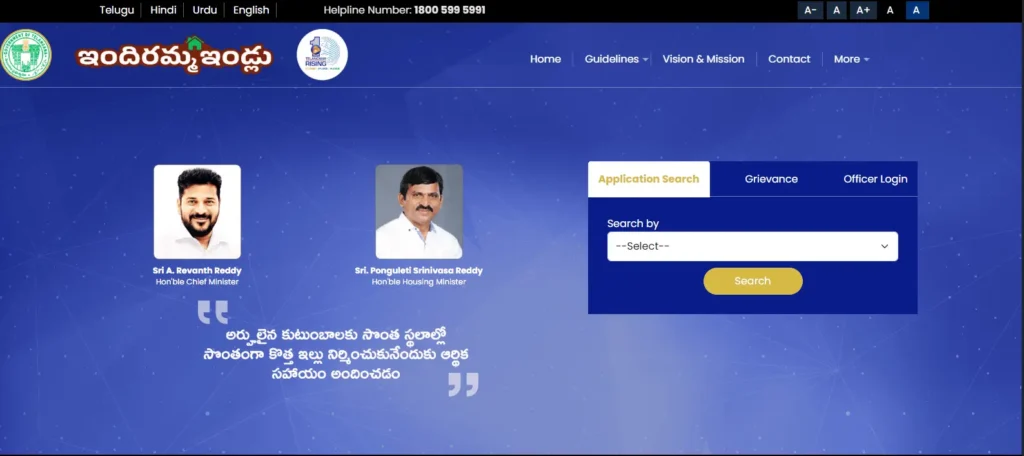
Step 2: Click on the “Application Search” Tab
Right on the homepage, you’ll see three tabs at the top — Application Search, Grievance, and Officer Login. Click “Application Search” (it’s usually selected by default when the page loads).
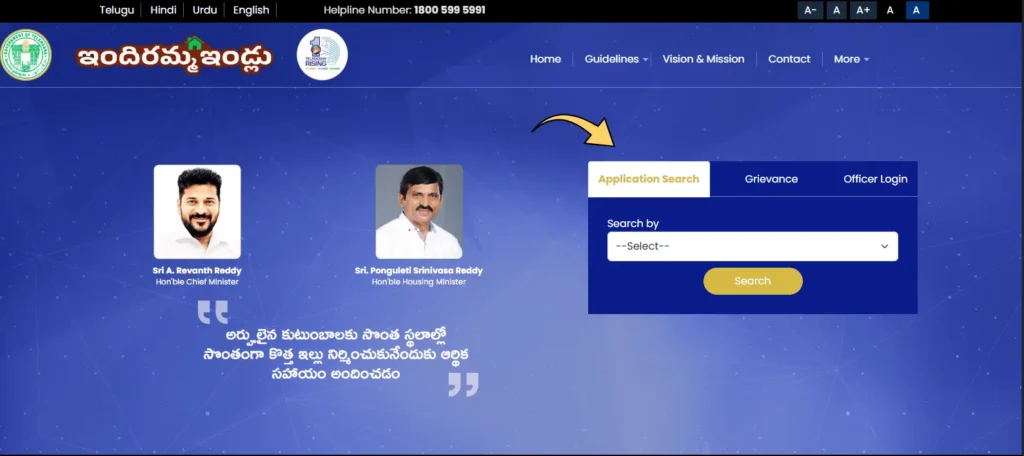
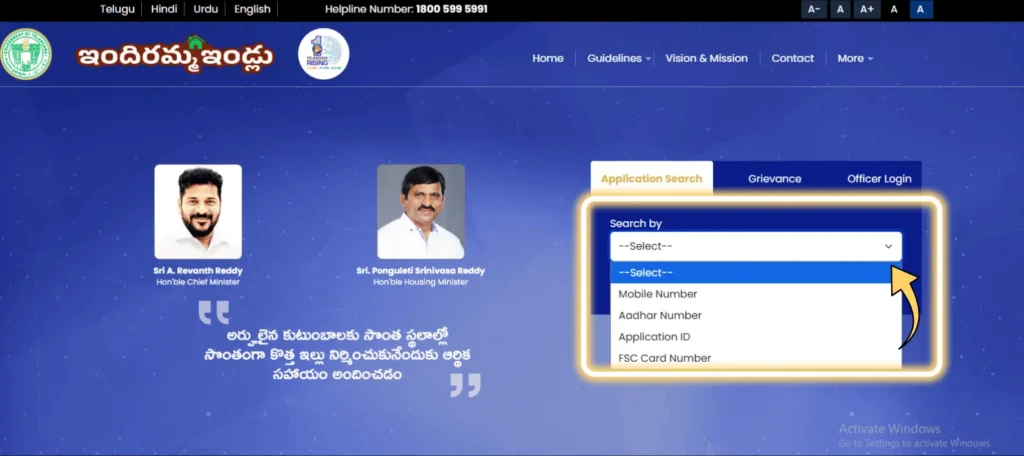
Step 3: Choose Your Search Method
From the dropdown, select how you want to search:
- Aadhaar number linked to your application
- Registered mobile number
- Application ID from your submission receipt
- FSC (Family Survey / Ration Card) number
Step 4: Enter Details & Search
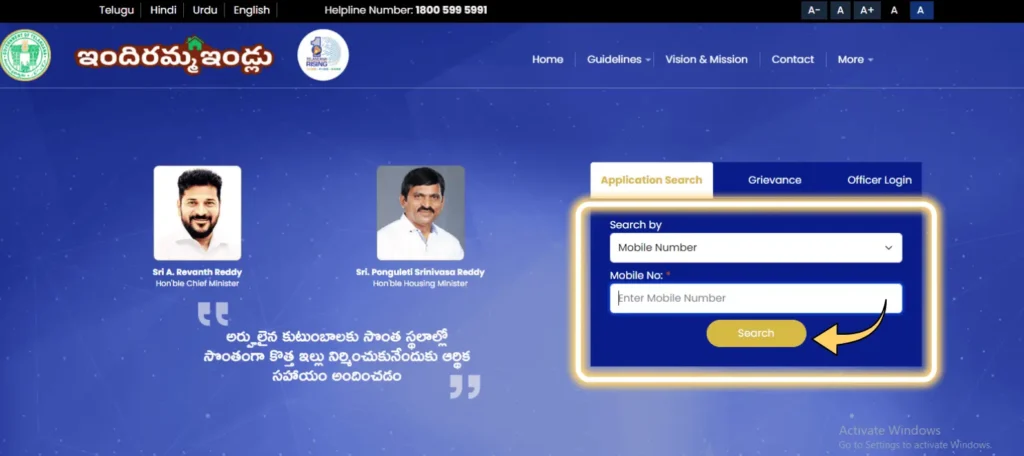
Type the number you selected. Double-check it before submitting — a single incorrect digit will return no result at all. Once you’re sure it’s correct, click the “Search” button.
Step 5: Read Your Status
The screen will show:
- Your current status — pending, approved, or rejected
- Land survey status, if your case involves one
- House sanction progress
- Your category (SC, ST, BC, Minority, or General)
- The specific reason, if your application was rejected
If You’ve Filed a Grievance, Track It Too
Already raised a complaint about your application? You can follow its progress through the grievance tracking section on the same portal. It shows whether your issue is still under review, has been resolved, or needs more information from your side. Checking this regularly means you can respond quickly if an officer asks for additional documents — delays here often come down to applicants missing a follow-up request, not the system itself being slow.
What Each Indiramma Illu Status Actually Means
Your status isn’t just a label — it tells you exactly what to do next. Here’s what each one signals, and whether you should wait, act, or worry.
| Status | What It Means |
|---|---|
| Pending | Your application is still being reviewed and verified |
| Under Verification | Field officials are actively checking your submitted documents |
| Approved | Your application has cleared review and qualifies for benefits |
| Sanctioned | Construction has been approved and funds are being released |
| Rejected | Not approved — the specific reason will display on screen |
What Your Application Record Shows You
Once you search using your Aadhaar, mobile number, Application ID, or FSC number, the portal doesn’t just show a yes-or-no status — it opens your full record. Here’s what’s actually in it:
- Your name and basic registered details
- The date you originally submitted your application
- Your beneficiary category — whether you’re classified as a landowner or a landless applicant
- Land survey status, where applicable
- Current house sanction progress
Before You Search: A Few Practical Tips
Use the exact details you registered with — even a small typo in your Aadhaar or mobile number will return no result at all, not an error message explaining why. Keep your Application ID or Aadhaar number ready before you start, so you’re not searching mid-way through the process. If nothing comes up after a careful retry, the helpline at 1800 599 5991 can usually confirm whether it’s a data issue or a genuine delay.
Name Missing or Application Rejected? Here’s the Escalation Path
- Search your status again through Application Search to confirm the exact issue.
- If it shows “Rejected,” note down the reason displayed on screen — you’ll need it for the next step.
- Use the “Raise Grievance” option on the same results page to file it online.
- Can’t file online? Call 040-29390057 on working days, or the toll-free line 1800 599 5991.
- Visit your nearest Mandal Revenue Office (MRO) or Gram Panchayat office in person, carrying your Aadhaar and Application ID.
- If the MRO doesn’t resolve it, escalate in writing to the District Collectorate.
Common rejection reasons include: an existing entry under another housing scheme, ownership of a house already on record, income above the eligibility threshold, or an Aadhaar number that isn’t correctly linked.
Name not found? Application rejected?
Immediately call 040-29390057 or visit your MRO office.
Documents You’ll Need to Apply
Getting your documents ready before you apply for Indiramma Illu saves you a second trip to the Gram Panchayat or Ward office. Here’s the complete list:
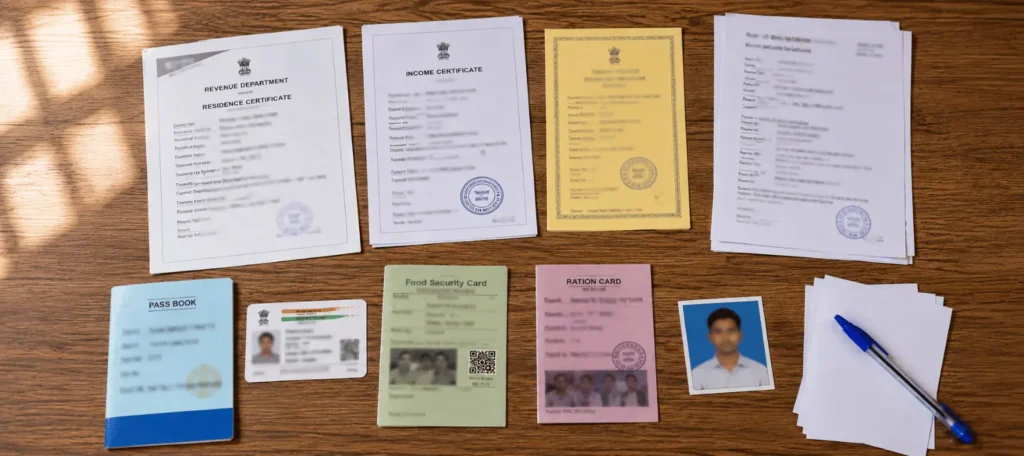
A quick tip: keep photocopies of everything self-attested in advance. Most rejections at the document stage happen not because a document is missing, but because a name or number on one document doesn’t match another — check that your Aadhaar, ration card, and application form all spell your name the same way before you submit.
Financial Assistance: How the ₹5 Lakh Is Released
The money isn’t handed over in one lump sum. It’s released in four stages, and each stage only unlocks the next after officials physically verify your construction progress using a geo-tagged mobile app.
| Category | Total Amount | Foundation | Walls | Roof | Finishing |
|---|---|---|---|---|---|
| General / BC / Minority | ₹5,00,000 | ₹1,00,000 | ₹1,25,000 | ₹1,75,000 | ₹1,00,000 |
| SC / ST Families | Up to ₹6,00,000 | ₹1,20,000 | ₹1,50,000 | ₹2,10,000 | ₹1,20,000 |
Here’s what each stage actually requires before payment moves:
- Sanction & Allotment — Your land or building permit gets approved, clearing you to begin construction.
- Foundation — Released once the base of the house is complete and a geo-tagged photo is submitted.
- Walls — Released once construction reaches lintel level.
- Roof — Released once the RCC slab is finished.
- Finishing — The final payment, released after doors, windows, toilet, and kitchen work are done.
Every rupee goes straight into your Aadhaar-linked bank account through DBT (Direct Benefit Transfer) — nothing is paid in cash, and no stage is skipped, so make sure your bank account is correctly linked to your Aadhaar before your application is sanctioned.
What Counts as a “Sanctioned House”?
Not every structure qualifies for the final Indiramma Illu payment — the government has set a fixed baseline every house must clear, whether it’s built in Adilabad or Hyderabad.
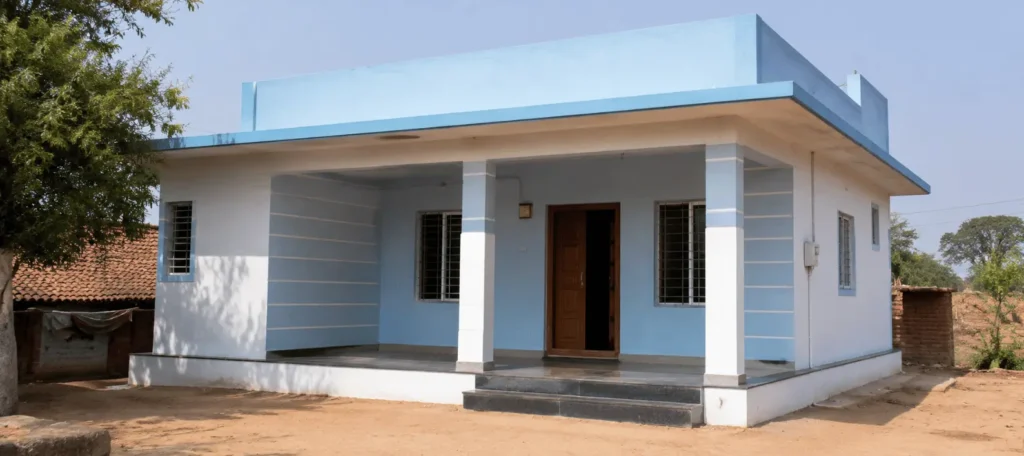
A sanctioned house must be a permanent pucca house with at least 400 sq. ft. of floor space, topped with an RCC (Reinforced Cement Concrete) roof rather than tin sheeting. It must have a separate kitchen with proper ventilation, its own toilet connected to a water supply, and drinking water access built in from the start. Flooring has to be finished, not bare mud, and every unit needs windows on at least two walls so air actually moves through the house. An electricity meter registered in the beneficiary’s own name completes the checklist.
These aren’t suggestions — a house that falls short on any of these gets flagged during the final inspection stage, which can hold up your last DBT payment.
Cost and Amenities of Urban Indiramma Flats
In cities where individual plots aren’t available, the government builds multi-storey Indiramma Illu flats instead — estimated at around ₹8 lakh per unit. Each flat comes with:
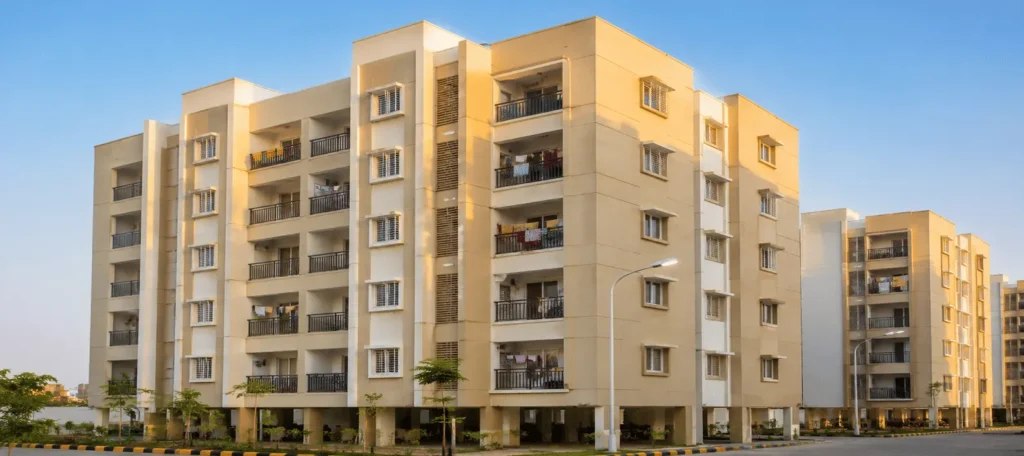
- Individual Drinking Water Connection — Every unit gets its own metered supply.
- Personal Electricity Meter — Registered directly in the beneficiary’s name.
- Underground Drainage — A proper sewage system built into the complex.
- Internal Roads and Parking — Planned access within the housing block.
- Elevators — Mandatory in any building taller than four floors.
- Community Hall and Open Spaces — Shared areas for residents.
Why Hyderabad Is Getting High-Rises Instead of Individual Plots
Land is the one thing Hyderabad genuinely doesn’t have enough of, which is why the standard “one plot, one house” model doesn’t work well inside the city. Instead, the government has switched to building 5-to-10-storey blocks, concentrated across Hyderabad, Rangareddy, Sangareddy, and Medchal-Malkajgiri — together covering around 28,000 families.
The location strategy matters here: these blocks are deliberately placed close to where residents already live and work, rather than pushing people to the city’s outskirts where they’d lose access to their livelihoods. Most units are on track for handover by the end of 2026, and once that happens, electricity meters transfer into the beneficiary’s name within 30 days — so the flat is genuinely yours from day one, not just on paper.
Housing for Middle-Income Families in Telangana
Indiramma Illu’s ambitions go beyond EWS and BPL families. The government is also working on affordable housing options for middle-income urban households who earn too much to qualify for EWS support, but still can’t afford market-rate homes.
Under this push, housing projects are being planned along the RRR and ORR corridors around Hyderabad. Officials have been tasked with identifying four sites, modelled on the earlier KPHM housing project. Separately, the Centre has approved 18,213 houses under PMAY-Urban 2.0 for Telangana, with a ₹273 crore central share out of a total ₹910.65 crore outlay, spread across 118 towns.
Priority Order for Housing Allotment
When more eligible families apply for Indiramma Illu houses in an area than units are available, allotment follows a set order:
- Widows and women-headed households
- Divorced women without housing support
- Persons with disabilities
- Tribal and SC/ST community members
- Sanitation workers and manual scavengers
- Agricultural labourers and landless daily-wage workers
- Telangana movement activists and their families
Final selection happens through Gram Sabha meetings, with the list verified by district-level committees before it’s made official.
Indiramma Illu Scheme Phases: What’s Included in Phase 1 & Phase 2?
The scheme is running in two distinct waves, each with a different focus.
Phase 1 ran from March 2024 to March 2026
- It targeted 4.5 lakh houses spread across all 119 assembly constituencies
- Averaging around 3,500 houses per constituency.
- Minimum 400 sq. ft., RCC roof, kitchen, and toilet
- ₹5 lakh per household, released via DBT in 4 stages
Phase 2 kicked off in April 2026
- Covers eligible families who were missed in Phase 1
- including those settled on Bhoodan land and other vulnerable groups the first round missed.
- Selection is merit-based, with no political interference
- Pending Phase 1 constructions are being completed first, before new sanctions
How to Apply for Indiramma Illu: Offline and Online
Both application routes are open, but offline stays the go-to option for most families, simply because reliable internet isn’t a given in every village or ward.
Offline Application:
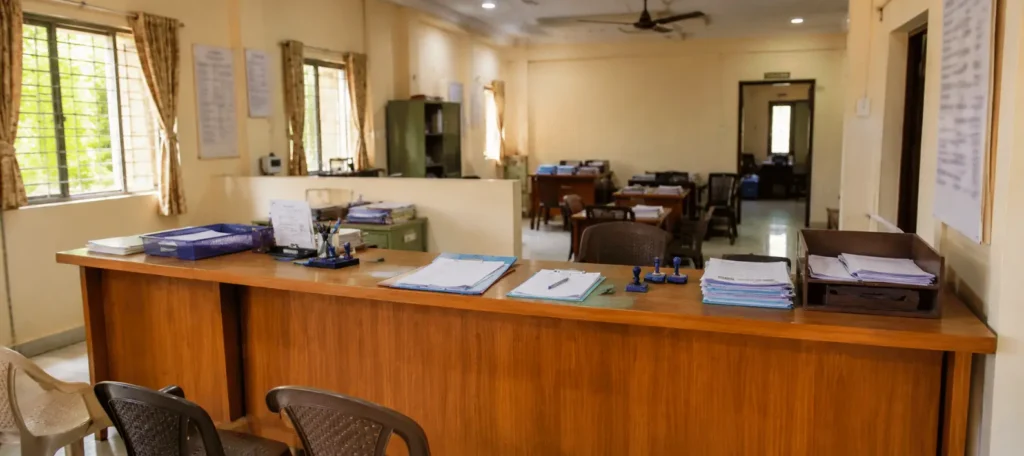
- Visit your nearest Gram Panchayat or Municipal Ward office — no appointment needed, walk-ins are accepted.
- Collect the application form — it’s free, so don’t pay anyone who asks for money to “arrange” one.
- Fill in your personal, income, and property details carefully — match the spelling exactly as it appears on your Aadhaar.
- Attach self-attested copies of every required document.
- Submit the form and collect your acknowledgement receipt — this has your application number, and it’s the one thing you’ll need for every future status check, so keep it somewhere safe.
- Your application then moves to the MRO for field verification, which is when an official actually visits to confirm your details.
Online Application:
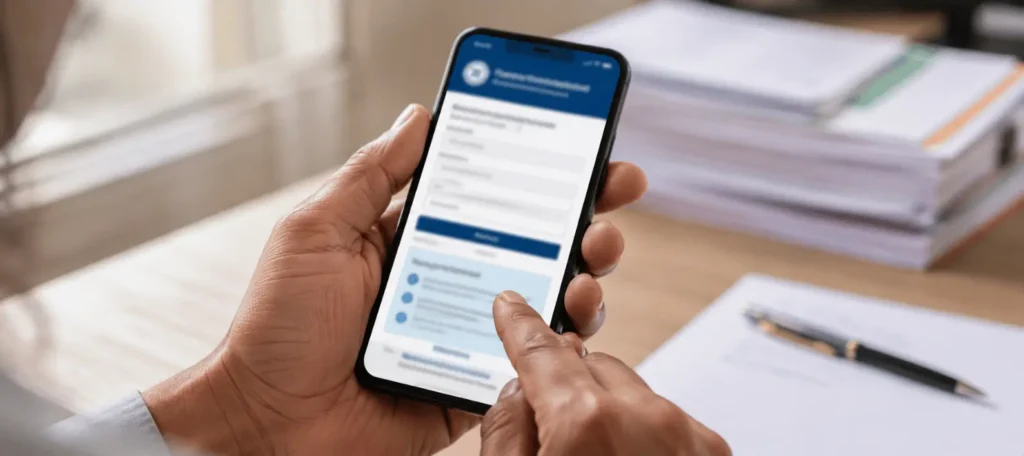
- Go to indirammaindlu.telangana.gov.in.
- Register using your Aadhaar-linked mobile number and verify with the OTP sent to you.
- Fill out the digital form and upload scanned copies of your documents — clear, readable scans avoid delays later.
- Submit, then save your Application ID immediately — take a screenshot or write it down, since this is your tracking reference going forward.
Whichever way you apply, that receipt or Application ID is your key to everything that comes next — status checks, grievance filing, and sanction list lookups all run through it. Losing it means extra trips to your MRO just to retrieve your application number, so it’s worth keeping a photo of it on your phone as backup.
What Happens Behind the Scenes After You Apply
Submitting your Indiramma Illu application isn’t the finish line — it’s the starting point of a verification chain that runs through several government offices before any money moves. Here’s what’s actually happening at each point, and roughly how long it tends to take.
Once your form reaches the MRO, a field official visits to confirm the details you’ve submitted match reality — your land status, your family’s income bracket, and whether you genuinely lack a pucca house. This on-ground check is usually what takes the longest, since it depends on officer availability in your mandal.
After field verification clears, your case goes to the Gram Sabha for local approval, which is the community-level checkpoint meant to keep selection transparent and free of favoritism. Only after this does your status shift toward “Approved,” and eventually “Sanctioned,” once your first construction stage is confirmed and DBT starts flowing.
If your status hasn’t moved in several weeks, it usually means one of two things: either your file is still waiting in the field-verification queue, or a document mismatch is quietly holding things up without triggering a rejection. In either case, a quick visit to your MRO — rather than repeatedly refreshing the status page — is what actually moves things forward.
మీ దరఖాస్తు స్థితి చాలా వారాలుగా మారకపోతే, ఆన్లైన్లో మాటిమాటికి చెక్ చేయడం కంటే నేరుగా మీ MRO కార్యాలయాన్ని సందర్శించడం ఉత్తమం.
Checking Your Status Through the Official Mobile App
Don’t want to open a browser every time? There’s a mobile app too — though it’s worth knowing what it’s actually built for.
- Open the Play Store on your Android device.
- Search for “INDIRAMMA INDLU” — look for the listing from Centre for Good Governance, Hyderabad, tagged under the Government category, to make sure you’re installing the genuine app and not a lookalike.
- Log in using your Aadhaar-linked mobile number and verify with the OTP sent to you.
- On the dashboard, tap “Beneficiary Status.”
- Your current status, category, and any sanction details appear right there — no need to navigate through menus like on the website.
The app essentially mirrors what the website shows, but it’s faster for repeat checks since you stay logged in between visits. It’s a good option if you’re checking your status regularly, or if you’re in an area with a weaker internet connection where loading the full website each time is inconvenient.
One thing to keep in mind: only install the app from the official Play Store or App Store listing, and check that the publisher name matches the Telangana government — a few lookalike apps have appeared using similar names and icons, and downloading the wrong one won’t show your real status at all.
Urban Flat Allotment: How It Works
If you’re an urban applicant heading into one of the high-rise blocks instead of an individual house, the allotment process runs a bit differently.
Only applicants without any existing house in Telangana qualify, and your income needs to fall within the EWS limit set by the Telangana Housing Board. Allotment follows category-based quotas — SC, ST, BC, Minority, and General — rather than a first-come-first-served list. When more eligible families apply for a location than there are units available, the district conducts either a lucky draw or merit-based selection to decide who gets in.
Once you’re allotted a flat, registration and electricity meter transfer happen together at handover — so you walk in with both the paperwork and the utilities already in your name, not waiting weeks for either to catch up.
Beneficiary Lists Are Published District by District
Telangana runs this Indiramma Illu scheme across all 33 districts, and the official portal keeps a separate beneficiary list for each one. Once you select your district, you can narrow it further by mandal and then by village to find your name faster.
Districts covered under the scheme:
Adilabad · Bhadradri Kothagudem · Hyderabad · Jagtial · Jangaon
Jayashankar Bhupalapalle · Jogulamba Gadwal · Kamareddy · Karimnagar
Komaram Bheem Asifabad · Mahabubabad · Mahabubnagar · Mancherial
Medak · Medchal-Malkajgiri · Mulugu · Nagarkurnool · Nalgonda
Narayanpet · Nirmal · Nizamabad · Peddapalli · Rajanna Sircilla
Rangareddy · Sangareddy · Siddipet · Suryapet · Vikarabad
Wanaparthy · Warangal Urban · Warangal Rural · Yadadri Bhuvanagiri
Lists get updated in batches after each verification round. If your name isn’t there today, check back after a few weeks rather than assuming you’ve been left out — batch updates are routine, not a rejection signal.
Keeping Indiramma Illu Honest: Action Against Misuse
For the Indiramma Illu programme, accountability checks matter as much as the funding itself.
District Collectors carry out physical occupancy checks, meaning officials visit in person to confirm a beneficiary is actually living in the house they were allotted. Families who vacate or rent out their allotted house without permission risk losing their sanction entirely. There’s also a ₹25,000 reward for reporting a bogus beneficiary or a bribery attempt, giving citizens a direct stake in flagging misuse.
On the ground, no colony is handed over until basic infrastructure — water, electricity, drainage, roads, and street lighting — is fully in place. Electricity meters are then transferred into the beneficiary’s name within 30 days of handover.
Filing a Grievance: The Full Process
If your Indiramma Illu application was wrongly rejected, your payment is delayed, or your name is missing, here’s how to formally raise it:
- Go to indirammaindlu.telangana.gov.in and select “Grievance Entry.”
- Verify your registered mobile number through OTP.
- Choose the grievance type that matches your issue — rejected application, delayed payment, incorrect details, or a missing name.
- Describe the problem clearly, including your Application ID and Aadhaar number so officials can locate your file fast.
- Submit, and save the Grievance Ticket ID you receive — you’ll need it to track progress later.
Track your complaint anytime at indirammaindlu.telangana.gov.in/grievenceSearch. For direct help, call 040-29390057 on working days, or the toll-free line 1800 599 5991.
FAQs About Indiramma Illu
Final Thoughts on Indiramma Illu
Indiramma Illu isn’t just another scheme on paper. Since 11 March 2024, it has moved 4.5 lakh houses through Phase 1, backed by a ₹22,000 crore budget. Phase 2 is now reaching families the first round missed.
The ₹5–6 lakh grant releases in four verified stages, not as one payment. Landless families get a free plot first, and every beneficiary list clears Gram Sabha approval before it’s final — nothing here runs on guesswork.
Keep your Aadhaar and bank account linked correctly, and check your status through Application Search on indirammaindlu.telangana.gov.in. If something looks wrong, don’t wait — file a grievance the same day.
ఇప్పుడే మీ దరఖాస్తు స్థితిని తనిఖీ చేయండి — మీ సొంతింటి కల నిజం కావడానికి ఇది మొదటి అడుగు.